
How Are Postage Stamps Made? Inside the Art and Science of Stamp Printing
Ever wondered how postage stamps are made? Explore the journey from initial artwork and engraving to printing, perforation and the finished collectible stamp.
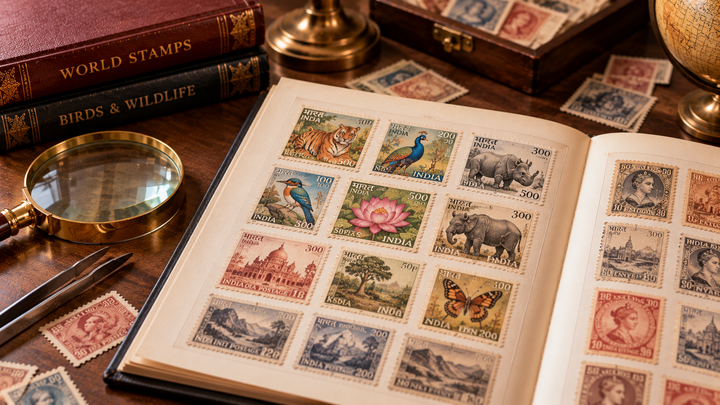
How Are Postage Stamps Made? Inside the Art and Science of Stamp Printing
Have you ever looked closely at a postage stamp and wondered how such a small piece of paper can contain so much detail?
From intricate illustrations and carefully selected colours to tiny lettering and precisely cut perforations, postage stamps are created through a fascinating combination of design, technology and craftsmanship.
Behind every finished stamp is a detailed production process involving research, artwork, printing, quality inspection and finishing. Understanding how postage stamps are made offers collectors a deeper appreciation of the creativity and precision behind these miniature works of art.
1. The Idea Behind a Postage Stamp
Every postage stamp begins with an idea.
Postal authorities issue stamps to commemorate important personalities, historical events, national achievements, wildlife, architecture, cultural traditions and many other subjects.
The subject is carefully selected to ensure that the stamp represents something meaningful.
For commemorative issues, the concept may be connected to a national celebration, an anniversary or an important historical milestone.
The design process usually considers:
-
The subject being represented.
-
Historical and cultural accuracy.
-
Visual composition and artwork.
-
Stamp dimensions and layout.
-
Denomination and issuing country.
-
Required inscriptions and official markings.
This initial stage establishes the identity and purpose of the stamp.
2. Designing the Stamp Artwork
Once the concept is approved, the artwork is developed.
Stamp designers work within a relatively small printing area, which makes composition particularly important. Every illustration, symbol, colour and line must be arranged carefully.
A successful design needs to remain visually clear even at a very small size.
Depending on the issue, the artwork may include portraits, monuments, landscapes, animals, national symbols or intricate decorative patterns.
The final design generally includes important details such as the country name, denomination and other required inscriptions.
For collectors, these design elements are often among the most interesting characteristics of a stamp.
3. Engraving and Preparing the Printing Design
Some postage stamps are produced using engraving techniques, which involve creating extremely fine lines and details on a printing surface.
Traditional engraved stamp production requires considerable skill and precision.
The engraving process can create distinctive textures, detailed portraits and fine decorative elements.
Other stamp production methods use digitally prepared artwork, photographic processes or specialised printing plates.
The printing method selected depends on the issuing authority, design requirements, production scale and intended finish.
4. Printing the Postage Stamps
Printing is one of the most important stages of stamp manufacturing.
Different printing techniques are used around the world. Some commonly encountered methods include:
Intaglio Printing
Intaglio printing involves transferring ink from recessed areas of a printing plate onto paper.
It is particularly associated with detailed engraved designs and can create a distinctive tactile appearance.
Lithography and Offset Printing
Lithographic and offset printing techniques transfer images through a printing system using prepared plates.
These methods are suitable for reproducing detailed artwork and multiple colours.
Photogravure
Photogravure is a printing technique capable of reproducing detailed tonal images. It has been used for certain postage stamp issues.
Digital Printing
Digital printing allows artwork to be reproduced using modern digital printing technology. Its use depends on the postal authority's production requirements.
Different techniques can give stamps distinctive visual and physical characteristics, making printing methods an interesting subject for philatelists.
5. Paper Selection and Special Features
The paper used in postage stamp production is selected according to the requirements of the issuing postal authority.
Different issues may use specialised papers with particular thicknesses, finishes and security characteristics.
Some stamps may incorporate special features such as:
-
Watermarks.
-
Fluorescent or phosphorescent properties.
-
Security printing elements.
-
Special inks.
-
Embossed details.
-
Unusual paper finishes.
These features may help identify particular issues and can be important when studying stamp varieties.
6. Perforation: Creating the Familiar Stamp Edges
One of the most recognisable characteristics of a traditional postage stamp is its perforated edge.
Perforations are small holes or cuts created between individual stamps to make separation easier.
After printing, sheets or rolls may pass through specialised perforating equipment.
The resulting perforation pattern is an important characteristic that collectors often examine.
Different stamps can have different perforation measurements, arrangements and characteristics.
Some issues are also produced without perforations, commonly described as imperforate stamps.
7. Quality Inspection and Final Production
Before stamps are released, they undergo production checks.
The aim is to ensure that the finished stamps meet the required standards for printing and postal use.
Inspection may consider:
-
Colour consistency.
-
Printing clarity.
-
Correct denomination and inscriptions.
-
Paper quality.
-
Perforation alignment.
-
Overall design appearance.
-
Sheet and production accuracy.
After production and inspection, the stamps are prepared for distribution through the relevant postal network.
8. Why Printing Methods Matter to Stamp Collectors
Understanding stamp production can make collecting more interesting.
Two stamps featuring the same subject may have different printing characteristics, paper types, perforations or other production details.
Collectors often study these differences to identify specific issues and varieties.
Printing methods can also help explain why certain stamps have distinctive textures, fine lines, colour characteristics or visual finishes.
For specialised collecting, reliable catalogues and expert references are useful for confirming these details.
9. What Are Stamp Printing Errors?
Although stamp production involves careful inspection, printing irregularities can sometimes occur.
Some recognised varieties and errors may attract specialist collector interest.
Examples include:
-
Missing colours.
-
Inverted design elements.
-
Misaligned printing.
-
Double impressions.
-
Unusual perforation varieties.
-
Recognised paper or watermark differences.
However, not every unusual appearance is a genuine printing error. Damage, alterations and normal production characteristics can sometimes be mistaken for varieties.
Specialist references and authentication are important before identifying an unusual stamp as an error.
10. Postage Stamps: Small Pieces of Art with Remarkable Stories
The production of a postage stamp involves much more than printing an image on paper.
It brings together historical research, artistic design, specialised printing techniques and careful production processes.
From the first concept to the finished stamp, every stage contributes to creating a miniature representation of a country's identity, culture and achievements.
For collectors, understanding this process adds another layer of appreciation to every stamp they discover.
Explore the World of Philately with PhilaBasket
Every postage stamp has a story, and understanding how stamps are made helps reveal the craftsmanship behind those stories.
Whether your interest lies in Indian postage stamps, international issues, commemorative releases or First Day Covers, philately offers countless opportunities to discover history through miniature works of art.
At PhilaBasket, explore postage stamps and philatelic collectibles that celebrate the fascinating world of postal history.
PhilaBasket — Discover the Stories Behind Every Stamp.
Related articles
What Are First Day Covers? A Complete Guide to Collecting FDCs
What Are First Day Covers? A Complete Guide to Collecting FDCs A postage stamp represents a moment in postal history, but what if you could preserve the story...
How to Identify Rare and Valuable Postage Stamps: 7 Things Every Co...
Discover what makes a postage stamp rare and valuable. Learn seven important factors collectors consider when identifying interesting and potentially valuable stamps.
What Is Philately? Discover the Art and History of Stamp Collecting
What Is Philately? Discover the Art and History of Stamp Collecting A postage stamp is much more than a small piece of printed paper. It represents a country's...