
How to Identify Rare and Valuable Postage Stamps: 7 Things Every Collector Should Know
Discover what makes a postage stamp rare and valuable. Learn seven important factors collectors consider when identifying interesting and potentially valuable stamps.
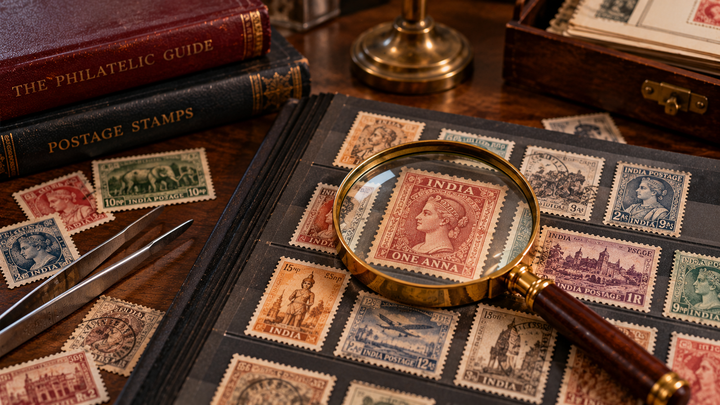
How to Identify Rare and Valuable Postage Stamps: 7 Things Every Collector Should Know
Have you ever discovered an old postage stamp and wondered whether it could be valuable? Some stamps are worth considerably more than their original face value because of their rarity, historical importance, condition or demand among collectors.
However, not every old postage stamp is rare, and age alone does not determine a stamp's value. Understanding the characteristics that make certain stamps desirable is an important part of philately.
Whether you are a beginner or an experienced collector, learning how to identify rare and valuable postage stamps can help you make more informed collecting decisions.
1. Understand the Rarity of a Stamp
Rarity is one of the most important factors influencing a postage stamp's desirability.
Some stamps were issued in limited quantities, while others became scarce because relatively few surviving examples remain in good condition.
Factors that can influence rarity include:
-
Limited original printing quantities.
-
Short periods of postal use.
-
Withdrawn or replaced issues.
-
Surviving examples in exceptional condition.
-
Unusual historical circumstances surrounding an issue.
A stamp does not automatically become rare simply because it is old. Researching its original issue and surviving examples is essential.
2. Examine the Condition Carefully
Condition can significantly influence collector interest and market value.
Even a historically important stamp may be less desirable if it has visible damage.
Collectors commonly examine:
Perforations: Check whether the perforations are complete, evenly preserved and free from damage.
Colour: Look for fading, discolouration or unusual changes.
Paper quality: Examine the stamp for creases, tears, thinning and stains.
Gum condition: For unused stamps, the condition of the original gum may be important.
Centring: Observe how well the printed design is positioned within the stamp's perforated edges.
Cancellation: For used stamps, examine the cancellation mark and its effect on the design.
Always handle potentially valuable stamps carefully and avoid attempting to clean or repair them yourself.
3. Look for Printing Errors and Varieties
Printing errors and recognised varieties can make particular stamp issues especially interesting to collectors.
Some examples include:
-
Inverted design elements.
-
Missing colours.
-
Misaligned printing.
-
Double impressions.
-
Paper or perforation varieties.
-
Recognised differences between printing plates.
However, not every unusual-looking stamp is a genuine printing error.
Some apparent varieties may result from damage, alterations or printing characteristics that are normal for the issue. Authentication and specialist references are important before assigning additional value to an unusual stamp.
4. Research the Stamp's Age and Historical Significance
A stamp's historical background can contribute to its importance.
Early postal issues, stamps from significant historical periods and commemorative releases connected to important events may attract specialist interest.
When researching a stamp, identify:
-
The country or postal authority that issued it.
-
Its year and date of issue.
-
Its denomination.
-
The person, place or event represented.
-
Its printing and design characteristics.
-
Its historical context.
Indian philately, for example, includes important early issues, stamps from the independence period and commemorative releases representing the country's cultural and historical heritage.
Understanding the story behind a stamp can make collecting more meaningful.
5. Check Collector Demand and Market Interest
Rarity alone does not guarantee a high selling price.
The number of collectors interested in a particular issue can influence its market value.
Some stamps attract strong demand because they belong to popular collecting categories, such as:
-
Early Indian postage stamps.
-
British India issues.
-
Indian commemorative stamps.
-
Famous historical personalities.
-
Wildlife and nature themes.
-
International classic stamps.
-
Recognised printing varieties.
Compare recent realised auction prices for genuinely comparable examples rather than relying only on advertised asking prices.
Remember that catalogue values, asking prices and actual sale prices are not necessarily the same.
6. Use Reliable Stamp Catalogues and References
Identifying a stamp accurately is an important step towards understanding its potential value.
Professional stamp catalogues and specialist references provide information about issue dates, denominations, design variations, perforations and recognised varieties.
You can also explore:
-
Established philatelic catalogues.
-
Postal authority publications.
-
Specialist stamp collecting books.
-
Reputable auction archives.
-
Philatelic societies and expert communities.
For potentially rare or expensive stamps, consider obtaining an opinion or certificate from a recognised philatelic expert.
7. Understand Authentication and Provenance
When dealing with potentially valuable stamps, authenticity matters.
A stamp may appear unusual because of a printing variety, but it could also have been altered, repaired or misrepresented.
Provenance refers to the documented history of an item's ownership or origin.
Before purchasing an expensive collectible, consider:
-
Whether the stamp has been professionally examined.
-
Whether relevant certificates are available.
-
Whether its condition has been accurately described.
-
Whether the seller has a reliable reputation.
-
Whether previous ownership or acquisition details are documented.
Authentication is particularly important for rare issues, recognised errors and high-value philatelic material.
Are Old Postage Stamps Always Valuable?
One of the most common misconceptions among new collectors is that every old postage stamp must be valuable.
In reality, age is only one consideration.
A stamp issued many decades ago may be relatively common because large quantities were produced and many examples survive. A comparatively newer stamp may attract more interest if it has a recognised variety, limited availability or strong collector demand.
Rarity, condition, authenticity, historical significance and market demand all contribute to a stamp's desirability.
How to Start Identifying Stamps in Your Collection
If you have inherited or recently acquired a collection, begin with a systematic approach.
-
Separate stamps by country or postal authority.
-
Group them by approximate issue period.
-
Record denominations and visible inscriptions.
-
Examine perforations, paper and condition.
-
Research individual issues using reliable catalogues.
-
Identify recognised varieties and possible errors.
-
Seek expert advice for potentially rare or valuable examples.
Avoid removing stamps from old covers or attempting repairs until you understand their significance. The postal cover itself may contain important historical information.
Discover the Fascinating World of Philately with PhilaBasket
Identifying rare and valuable postage stamps is a rewarding part of stamp collecting. Every discovery offers an opportunity to explore history, understand printing techniques and appreciate the stories preserved through postal communication.
Whether your interest lies in Indian stamps, international issues, First Day Covers or historical postal collectibles, developing your knowledge can make your collecting journey even more enjoyable.
At PhilaBasket, explore a curated world of postage stamps and philatelic collectibles, and discover something fascinating for your collection.
PhilaBasket — Discover the Stories Behind Every Stamp.
Related articles
How Are Postage Stamps Made? Inside the Art and Science of Stamp Pr...
Ever wondered how postage stamps are made? Explore the journey from initial artwork and engraving to printing, perforation and the finished collectible stamp.
What Are First Day Covers? A Complete Guide to Collecting FDCs
What Are First Day Covers? A Complete Guide to Collecting FDCs A postage stamp represents a moment in postal history, but what if you could preserve the story...
What Is Philately? Discover the Art and History of Stamp Collecting
What Is Philately? Discover the Art and History of Stamp Collecting A postage stamp is much more than a small piece of printed paper. It represents a country's...